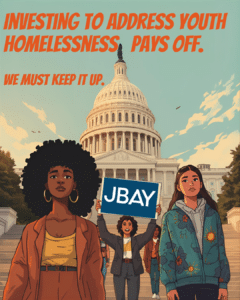
 Last fall, we published a report on how years of investment in addressing youth homelessness have led to declining rates of homelessness among young people in California, and yet imminent threats to both state and federal funding sources mean this progress may be short-lived.
Youth are different from the overall population in many ways: they are on the cusp of independence from the families and systems that may have offered support in the past; still developing their sense of self and identity; and are often in the midst of other major life transitions related to education and employment.
When it comes to addressing youth homelessness, we have long seen the benefits of tailoring programs and services specifically to young people and evidence that interventions aimed at preventing and/or limiting the duration of homelessness when it occurs at young ages decreases the rate of long-term adult homelessness.
So in fiscal year 2018, California established a “youth set-aside,” and began reserving 5% of newly established state homelessness funding for this purpose alone – local jurisdictions were required to invest a minimum of 5% of their allocations from the Homeless Emergency Aid Program (HEAP) in addressing homelessness among youth, ages 18-24.
Then, at the start of Governor Newsom’s term in 2019, with HEAP set to sunset, a new program to combat homelessness called the Homeless Housing, Assistance and Prevention (HHAP) Program emerged. The youth set-aside increased to 8%, then to 10% by fiscal year 2021. The state’s investments through HHAP have totaled $4.95 billion since 2019, $387 million of which address youth homelessness in particular.
The results have been very promising. HHAP has served over 50,000 youth to date, providing housing, services, rental assistance and more. Between 2019 and 2024, youth homelessness in California went down by 24%, despite a 24% increase in overall homelessness across the state, and an 11% increase in youth homelessness nationwide.
Recent coverage by KQED features JBAY as an expert voice in advocating for HHAP funding and highlights the transformative work of Youth United for Community Action (YUCA), a nonprofit based in East Palo Alto, run by youth for youth at risk of or experiencing homelessness.
But this past November, the U.S. Department of Housing and Urban Development (HUD) changed the guidelines for federal homelessness funding to more tightly restrict which organizations qualify and how funds may be used. Cuts and restrictions on funding usually mean tighter local competition for funds, and make state funding for youth homelessness even more critical.
Meanwhile, in California, lawmakers set aside no new funding for HHAP for the 2025-26 fiscal year. They earmarked $500 million ($50 million of which will be invested in serving youth), 50% less than the amount allocated for the program in fiscal year 2026-27.
As of now, the future of funding for youth homelessness remains in question. Governor Newsom sued the federal government over the funding changes. HUD rescinded its guidelines, but has not yet announced what will stand in their place.
We know what works. The big question is: Will California take action to sustain its progress in reducing youth homelessness?
To learn more about JBAY’s housing work, click here.