Education & Support

Resources

Economic Security
|Tools and Toolkits
CalFresh benefits have been delayed as of November 1, 2025, caused by the federal shutdown. When federal funding for benefits resumes, there will likely be a weeklong delay until CalFresh participants have access to the funds. Communities across the state are organizing to address food insecurity, and while these resources will not match the level of support available statewide through CalFresh, they may help bridge the gap in benefits. This matrix provides a collection of food and financial support resources to assist young adults who are impacted.
Last Updated Nov 4, 2025
Education
|Publication
This toolkit, developed by John Burton Advocates for Youth in partnership with Rio Hondo College, features the college’s Hope Scholars program—an innovative model that provides holistic, on-campus support for students experiencing homelessness and housing insecurity. Hope Scholars integrates financial assistance, housing resources, and case management services in collaboration with the college’s Basic Needs Center. The program has demonstrated measurable success in improving stability and educational outcomes for students facing housing challenges. The publication offers practical guidance for other California community colleges and universities seeking to develop or expand similar programs, drawing on lessons from Rio Hondo’s implementation and evaluation findings from the Center for Equitable Higher Education.
Last Updated Oct 31, 2025
Economic Security
|Webinar
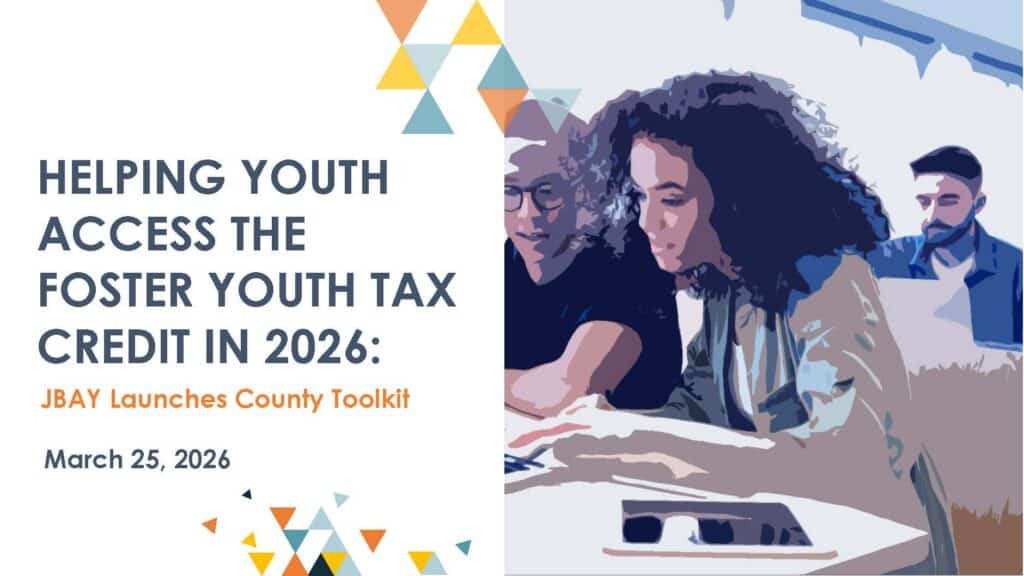
This web seminar marked the release of a report examining the first three years of the California Foster Youth Tax Credit (FYTC). As of August 31, 2025, this refundable tax credit, available to current and former foster youth ages 18-25, has put $17.20 million directly into the hands of more than 16,000 young people—plus an estimated $18.66 million in additional credits unlocked from filing. The report provides a snapshot of statewide progress in year three, alongside data from the program’s first two years. It also analyzes persistent barriers to reaching the estimated 33,648 eligible youth and explores strategies to close the gap.
Last Updated Oct 15, 2025
Economic Security
|Publication
This report examines the first three years of the California Foster Youth Tax Credit (FYTC). As of August 31, 2025, this refundable tax credit, available to current and former foster youth ages 18-25, has put $17.20 million directly into the hands of more than 16,000 young people—plus an estimated $18.66 million in additional credits unlocked from filing. The report provides a snapshot of statewide progress in year three, alongside data from the program’s first two years. It also analyzes persistent barriers to reaching the estimated 33,648 eligible youth and explores strategies to close the gap, including implementation of SB 624 (Caballero).
Last Updated Oct 15, 2025
Economic Security
|Fact Sheet
SB 624 (Caballero) aims to reduce poverty among current and former foster youth by increasing access to the California Foster Youth Tax Credit (FYTC) through institutionalization of county-level outreach. SB 624 requires the California Department of Social Services to issue guidance to counties on best practices for encouraging nonminor dependents (NMDs) and former foster youth to file taxes and claim the FYTC, and requires county child welfare agencies and probation departments to mail information to NMDs annually about the FYTC and free tax filing resources.
Last Updated Oct 7, 2025
Education
|Tools and Toolkits
This promotional flyer provides an overview of CalKIDS, California’s college savings account program.
Last Updated Sep 3, 2025
Education
|Webinar
This webinar, hosted by John Burton Advocates for Youth (JBAY), provided an in-depth exploration of Satisfactory Academic Progress (SAP) policies and their implications for equity in higher education. The session highlighted findings from JBAY’s multi-year research, including the “Overlooked Obstacle” reports, which revealed how strict SAP requirements disproportionately impact low-income and minoritized students, particularly foster youth and students of color. Key topics included the challenges of maintaining financial aid under SAP standards, the role of AB 789 in standardizing SAP policies across California institutions, and the results of JBAY’s audits of institutional compliance with AB 789. The webinar also shared insights from a comprehensive dataset of California Community Colleges, exploring SAP, financial aid retention, and graduation outcomes for Pell Grant, Cal Grant B, and CCPG recipients.
Last Updated Aug 21, 2025
Education
|Tools and Toolkits
This practitioner brief, published in August 2025 by John Burton Advocates for Youth (JBAY), examines the impact of Satisfactory Academic Progress (SAP) policies on community college students, particularly low-income, students of color, and foster youth. SAP standards, which require students to maintain a minimum 2.0 GPA and complete courses on time to retain financial aid, often act as hidden barriers to student success. The report highlights disparities in SAP compliance, with students of color, foster youth, and academically disadvantaged groups facing the steepest challenges. It also explores the outcomes of Pell Grant, Cal Grant B, and California College Promise Grant (CCPG) recipients, emphasizing the need for equity-focused interventions to prevent aid loss and improve graduation rates. The brief underscores the importance of early support, culturally responsive advising, and flexible financial aid policies to address systemic inequities.
Last Updated Aug 21, 2025
Housing & Homelessness
|Webinar
This webinar provided a virtual policy update for California stakeholders on the federal Foster Youth to Independence (FYI) voucher program, joined by a representative from the U.S. Department of Housing and Urban Development (HUD). Despite sweeping federal cuts, funding remains for FYI vouchers, which provide 3-5 years of subsidized rent coupled with supportive services to former foster youth. The webinar reviewed the status of FYI at the federal level, the role of the program in California, and April 2025 HUD guidance which introduced reforms to improve access and flexibility.
Last Updated Jun 25, 2025
Housing & Homelessness
|Program Roster
This roster helps youth-serving stakeholders get involved in local Behavioral Health Services Act (BHSA) planning. The roster includes contact information for the individual in each county responsible for coordinating the development of the three-year Integrated Plan, which must include community input.
Last Updated Jun 24, 2025
Categories
Categories
Resource Type
Resource Type

Forging brighter futures for foster youth

Skip to content