Education & Support

Resources

Health
|Fact Sheet
In July 2017, California adopted a new law, the California Foster Youth Sexual Health Education Act (Senate Bill 89), which requires comprehensive sexual health education for youth in foster care and new training requirements for caregivers, social workers and judges.
Last Updated Apr 19, 2021
Education
|Webinar
In this webinar, attendees learned about the CA Foster Youth Initiative AmeriCorps program, an innovative strategy that helps community-based organizations, colleges, Independent Living Programs, County Offices of Education and others to expand their capacity to support foster youth, offer career opportunities for young adults with experience in the foster care system, and incorporate the voice of those with lived experience more explicitly into their programming. The webinar featured guest panelists, including the Child Abuse Prevention Center and current AmeriCorps members, and provided recommendations on how others can leverage the nearly $1 million that has been set aside for this initiative to help their own agencies build a stronger continuum of care toward academic and career pathways for foster youth as they transition into adulthood.
Last Updated Apr 25, 2022
Education
|Tools and Toolkits
A guide for child welfare and probation agencies to embed college-going practices into policies and procedures. This College Transitions Framework is a practical guide for child welfare and juvenile probation agencies for how to implement the SB 12 requirement such that it has the maximum impact on foster youth educational outcomes.
Last Updated Apr 12, 2022
Health
|Tools and Toolkits
In 2018-2020, JBAY and the Los Angeles County Department of Mental Health (LACDMH) came together to address this need as part of JBAY’s regional LA Opportunity Youth Collaborative Foster Youth College Advancement Project (LA OYC FYCAP). Many students with experience in foster care have access to Medi-Cal until age 26. County mental health agencies contract with local providers to serve clients with Medi-Cal. What if community colleges could partner with these local providers to offer co-located mental health services—meeting students where they already are, and at no extra cost to the college? JBAY and LACDMH led a multi-year effort with 11 community colleges and their local providers that resulted in co-located services, referral networks, and important steps forward. By making long-term mental health support accessible for foster youth, they have helped hundreds of students access care. Using this toolkit, California Community Colleges throughout the system can replicate these practices to connect students with Medi-Cal or no insurance to mental health services. Staff of many programs that serve students—the foster youth program, Veterans Resource Center, TRIO Program, EOPS, and others—can adopt these strategies.
Last Updated Apr 19, 2021
Economic Security
|Webinar
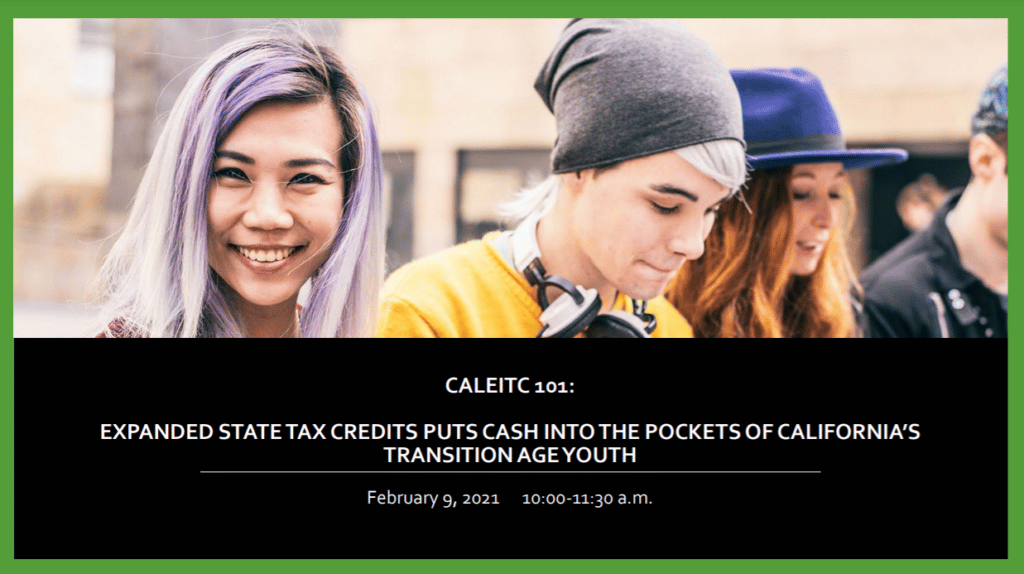
This webinar discusses strategies to help transition-age youth access the California Earned Income Tax Credit (CalEITC). In 2019-20, the CalEITC was expanded from $400 million to $1 billion. This followed the expansion of eligibility to include transition-age youth without dependents, means many current and former foster youth now qualify for the CalEITC. Webinar presenters included the California Franchise Tax Board and Santa Clara County Social Services Agency.
Last Updated Jan 30, 2023
Health
|Webinar
The new Partnering with Local Mental Health Providers to Support Foster Youth in College toolkit documents efforts to link Medi-Cal-eligible foster youth and other students from traditionally underserved groups to mental health services in the community, leverage existing funding, and develop systems to co-locate services on campus. California Community College support program staff, campus health center or mental health staff, county mental health agencies, and local providers can replicate these practices to remove barriers and connect students with Medi-Cal or no insurance to mental health services. In this webinar, the California Community College Chancellor’s Office, John Burton Advocates for Youth, and the Los Angeles County Department of Mental Health provide an overview of the toolkit framework.
Last Updated Apr 25, 2022
Education
|Program Roster
With support from the ECMC Foundation, JBAY is funding seven California Community Colleges to launch or expand their basic needs centers. This document provides an overview of the projects funded under this project.
Last Updated Apr 28, 2021
Housing & Homelessness
|Webinar
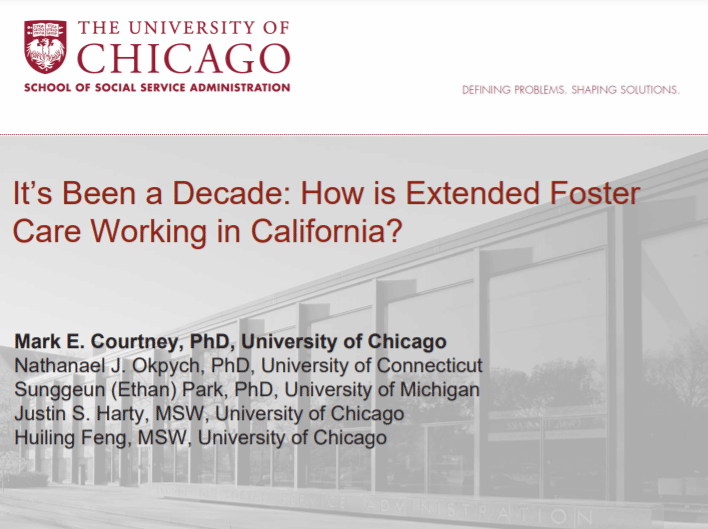
It’s been a decade since the extension of foster care to age 21 in California and the CalYOUTH Study has been evaluating its effect each step of the way. In this webinar, Professor Courtney presents on how youth who participated in extended foster care are faring in a wide range of areas, including housing, health, education and more. This webinar is an important resource for policy makers and practitioners to understand where extended foster care is benefiting young people and where additional work is required to fulfill its original goals.
Last Updated Feb 28, 2023
Education
|Tools and Toolkits
This toolkit is designed to assist college campuses to effectively implement and understand the new law. Items in the toolkit include Implementation recommendations, official bill language, frequently asked questions and sample forms for the Chafee grant appeal, student success plan and students services. Without a college degree, foster youth have a much lower likelihood of long-term economic security. The median weekly earnings of an individual with a bachelor’s degree are almost double those of a worker with only a high-school diploma. Opportunities for individuals without some form of post-secondary credential continue to diminish over time. Between 2008 and 2016 the U.S. economy lost 5.6 million jobs that require only a high school diploma or less while gaining 9.7 million jobs requiring a post-secondary credential.
Last Updated Apr 29, 2021
Education
|Fact Sheet
Effective January 1, 2021, California adopted new rules clarifying the role of Foster Youth Services Coordinating Programs (FYSCPs) to include coordination of efforts to support FAFSA completion among foster youth who are high school seniors. It also adds FAFSA completion rates to their bi-annual reporting requirement.
Last Updated Apr 20, 2021
Categories
Categories
Resource Type
Resource Type

Forging brighter futures for foster youth

Skip to content