Education & Support

Resources

Economic Security
|Webinar
In the 2019-2020 budget, the California Earned Income Tax Credit (CalEITC), a cash-back tax credit that puts money back into the pockets of California’s working families and individuals, was expanded from $400 million to $1 billion. More than 600,000 young adults in California, including current and former foster youth, are expected to qualify for the CalEITC this tax season. This could mean hundreds or thousands of dollars in tax refunds for transition age youth in care. With the support of the child welfare partners and free tax preparation services, these refunds can help young adults cover necessary expenses. This webinar includes the California Franchise Tax Board and discusses strategies to help transition-age youth access the CalEITC.
Last Updated Apr 25, 2022
Education
|Program Roster
The California State University system received an allocation in the 2019/2020 budget of $6.5 million annually to implement rapid rehousing at CSU campuses and selected seven campus to implement the program, listed in the attached document.
Last Updated Apr 28, 2021
Education
|Program Roster
Campus support programs that are specifically designed for foster youth can be a great resource while attending college. Program services vary considerably and can include personal and academic counseling, financial assistance, housing, mentoring and much more. Get the most accurate information about what each program offers by directly contacting the specific program.
Last Updated Jan 27, 2022
Education
|Program Roster
This roster contains contact information for the county-based Foster Youth Services Coordinating programs that work in collaboration with local partners on the California Foster Youth FAFSA Challenge.
Last Updated Apr 26, 2021
Health
|Publication
In 2017, California adopted the California Foster Youth Sexual Health Education Act (Senate Bill 89) to increase access to comprehensive sexual and reproductive health education for youth in foster care as well as ensure child welfare professionals and caregivers are equipped with knowledge to support healthy sexual development for foster youth. John Burton Advocates for Youth collected information from five Bay Area counties (Alameda, Contra Costa, San Francisco, Santa Clara and Solano) to understand how they have implemented SB 89 since the policy went into effect. This report shares those findings for statewide learning.
Last Updated Feb 28, 2023
Health
|Webinar
SB 89 Implementation in the Bay Area: What can We Learn as a State?This webinar concides with a publication of a report and shares out how five Bay Area counties are implementing SB 89 in their respective child welfare and juvenile justice systems to inform our collective understanding of best practices and obstacles to implementation.
Last Updated Feb 28, 2023
Education
|Fact Sheet
Effective January 1, 2020, California adopted new rules regarding the distribution process and eligibility requirements for the Chafee Education and Training Voucher program. Provided below is an explanation of the pertinent provisions of the bill (SB 150) that enacted these changes.
Last Updated Apr 28, 2021
Education
|Webinar
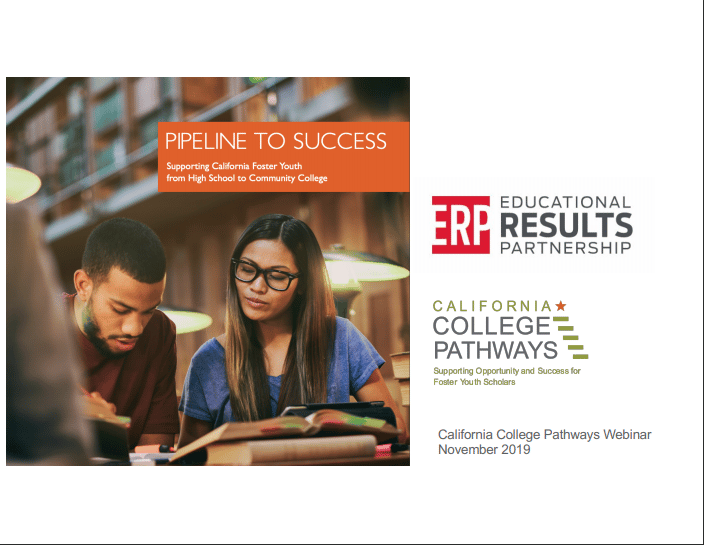
While many promising changes to policy and practice have been put in place in recent years to support foster youth college success, little empirical evidence has been available to help us understand which approaches are most effective. A new report from Educational Results Partnership and California College Pathways reviewed data from foster youth both within K-12 and community college systems in order to identify factors having the greatest impact on college GPA and unit completion. This webinar will review the report findings along with the recommendations that emerged for how foster youth can be best supported to achieve their educational goals.
Last Updated Apr 25, 2022
Education
|Webinar
This webinar provides strategies and best practices for ensuring that foster youth can successfully transition into post-secondary education and attain their educational goals. Panelists discuss how to set up foster youth for success before they transition to a post-secondary setting. In addition, this webinar focuses on approaches to encouraging college attendance, breaking down the college acceptance and financial aid processes and how to ensure that foster youth are linked to the range of supports available at college. Finally, panelists point you to online resources that can be used to support youth through the planning, application, and matriculation processes, including information about how to assist youth to enroll in industry-recognized certificate programs in hundreds of vocational programs available across the state.
Last Updated Apr 25, 2022
Housing & Homelessness
|Publication
This publication is a five-year policy agenda to address homelessness among California’s youth. This publication marks the ten-year anniversary of the 2009 release of “Too Big to Ignore: Youth Homelessness in California,” a previous policy agenda developed by JBAY and California Coalition for Youth. The 2019 policy agenda was developed based on in-depth interviews with 44 experts in the field, and covers four areas: resources and funding streams, adjacent systems and access to services, K-12 and post-secondary interactions and interventions, and strengthening the current homeless response system for homeless youth.
Last Updated Apr 19, 2021
Categories
Categories
Resource Type
Resource Type

Forging brighter futures for foster youth

Skip to content